
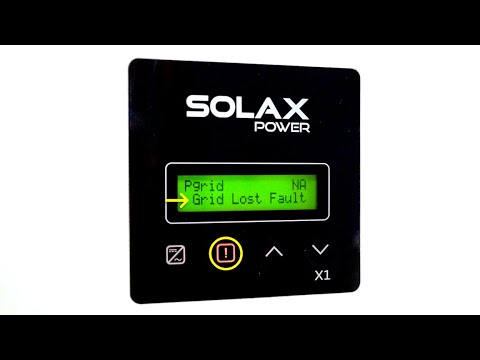
Well, here we go again.
Cyprus photovoltaics being cut off from the grid, after promises of improvements, still nothing.
Anyone who's had panels on their roof for more than a season will recognise the pattern by now.
The scale of it is what surprises people once they see the figures. Between January and May 2026, grid operators switched off enough solar generation to account for 65% of what the panels could actually have produced — 162 gigawatt-hours left on the table. Some households had their systems disconnected 15-17 times in a single month, sometimes days on end.
The official reasoning is that this keeps the grid stable when output outstrips demand, and that Cyprus isn't alone in doing it.
Fair enough, maybe — but it's cold comfort when you're staring at a bright blue sky and a silent inverter.
I happen to still be on the old net metering deal, so my export credits are at least worth something on paper. That's not much of a shield, though — the switch-off doesn't check what tariff you're on before it kills your output. Contract or no contract, the power you'd have generated is simply gone. Anyone who signed up after January has it worse still: net billing pays exported power at wholesale rates with no rollover, a much thinner deal than the old credit system. Add curtailment on top and it's little wonder applications for new PV systems have collapsed — down from close to 39,000 in 2025 to under 1,900 this year.
One enormous battery, or thousands of smaller ones?
Here's where the current strategy loses me. Instead of making household storage attractive, the government's energy plan leans almost entirely on a handful of massive, centrally-owned battery installations — roughly 570 MWh worth so far, developed and controlled by the state utility and its partners. It reads well as a headline figure, but I think it's the wrong shape for the problem.
Curtailment is a local phenomenon before it's a national one — it's rows of houses on the same street all exporting at once with the local network unable to absorb it. A battery sited kilometres away, reached through the same stretched cables that caused the bottleneck, does nothing for that street in the moment it's needed. A battery bolted next to the panels that made the power soaks it up exactly where the congestion happens.
There's also the question of who carries the risk. A single flagship storage scheme is a single point of failure — one delayed contract, one funding hiccup, one technical fault, and the whole plan stalls. Spread that same capacity across ten thousand rooftops instead, and no single failure takes down more than a sliver of it. Cyprus doesn't have to look far for a cautionary tale about mega-projects running over budget and over schedule — the LNG terminal saga is still fresh, and the Great Sea Interconnector, meant to arrive around 2028-2030, is already stuck amid regional tensions with no restart date in sight. A home battery, by contrast, can go in within weeks, not years, and pays for itself in roughly four years by most estimates — a far shorter horizon than a multi-billion-euro subsea cable with a patchy delivery record.
And then there's simply who ends up owning the asset. Centralise it, and the value and control sit with the utility and its contractors. Spread it across households instead, and the panels — and now the storage — stay something people actually own, with installation work going to local tradespeople rather than a handful of large firms.
None of this means the big projects are pointless; the island probably needs both eventually. But pouring almost all the policy effort into centralised storage while leaving household batteries too expensive to bother with looks like solving the problem in the slowest, least resilient way available, when a faster and more distributed fix is sitting right there on our own roofs.
So what's actually being done about it?
Household batteries — still the most direct fix, but a 10kWh unit runs €8,000-10,000, and the weaker payback under net billing keeps it out of reach for most people who joined after January.
Utility-scale batteries — where the money and momentum currently are, with hundreds of megawatt-hours already approved and controlled by the state utility.
The Great Sea Interconnector — the planned subsea link to the European grid via Greece that would finally give surplus power somewhere to go. Stalled since August 2026 amid regional tensions, with no timeline for restarting.So batteries are coming, just at the wrong scale for my liking, and the interconnector that would fix the deeper isolation problem is going nowhere fast. Until one of those actually delivers, expect more afternoons like this one — panels generating, and nowhere for it to go.
For now, disappointed is about the size of it.